Cosmetic and personal care packaging plays a critical role in product safety, user experience, and brand perception. From skincare bottles to cosmetic jars and functional closures, choosing the right packaging solution helps brands protect formulations while standing out in a competitive market.
This packaging guide is designed to help cosmetic and personal care brands understand common packaging types, material options, and key design considerations.
Cosmetic and personal care products are available in various packaging formats depending on texture, usage, and brand positioning. Common options include bottles, jars, pumps, and droppers.
Typical cosmetic packaging formats include airless pump bottles for serums and lotions, dropper bottles for oils, mist spray bottles for toners, and wide-mouth jars for creams and balms. Each format offers different advantages in terms of dispensing control, hygiene, and user experience.
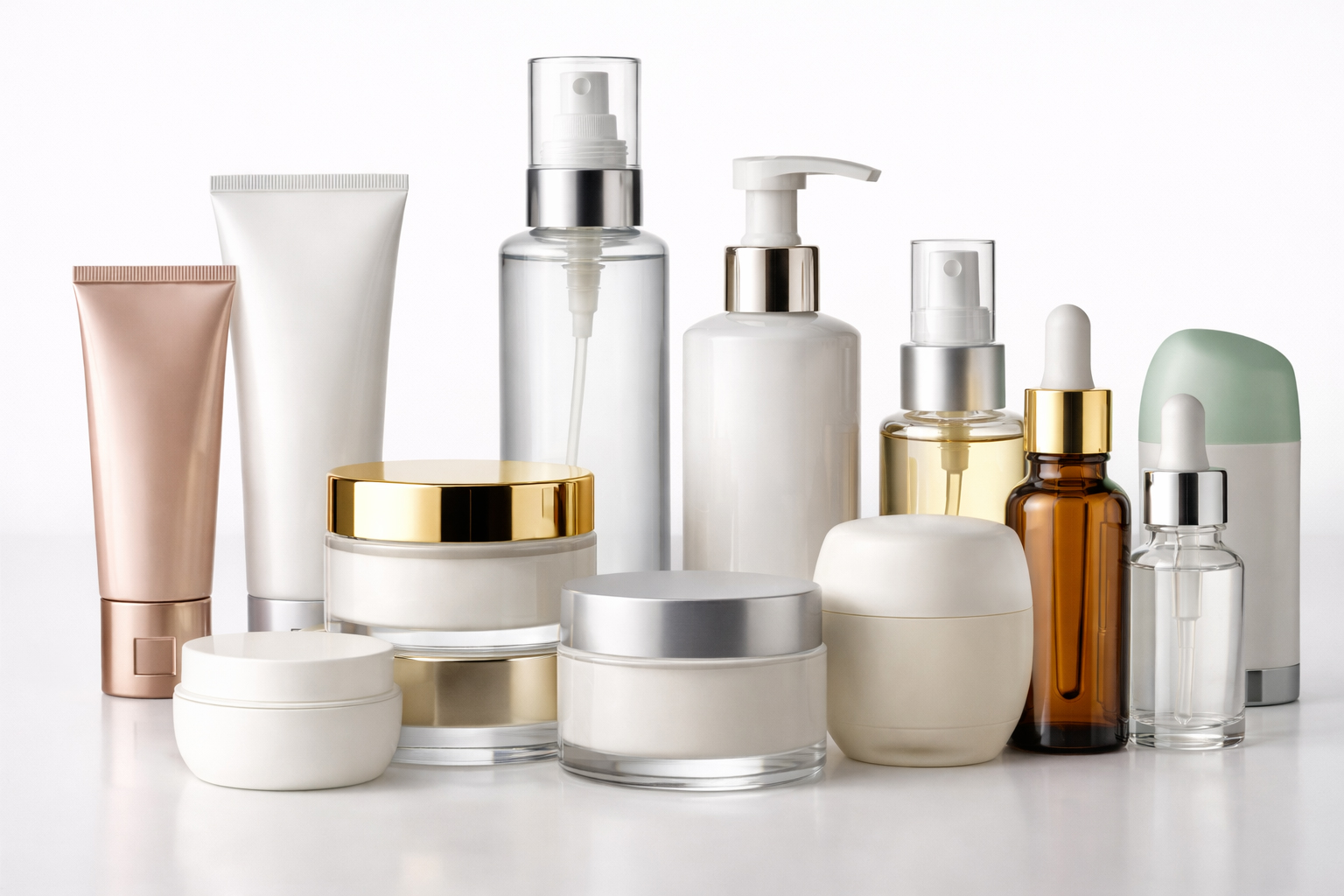
Plastic and glass materials are widely used in cosmetic and personal care packaging due to their versatility, durability, and aesthetic appeal. Choosing the right material ensures product protection, functionality, and a premium look that aligns with brand identity.
Plastic materials commonly include PET, HDPE, PP, AS, and PMMA:
PET is often chosen for its clarity and premium appearance, making it suitable for transparent cosmetic bottles.
HDPE offers excellent chemical resistance and is ideal for skincare packaging that requires durability.
PP is lightweight and widely used for closures and jars.
AS and PMMA are preferred for high-end cosmetic packaging due to their glass-like aesthetics.
Glass materials are valued for their luxurious feel, chemical inertness, and recyclability. They are commonly used for premium serums, creams, and essential oils. Glass packaging can be clear, frosted, or colored, and it offers excellent barrier properties to protect sensitive formulations from air and light. Combined with elegant closures, glass packaging enhances perceived product value and consumer trust.
Functionality is essential in cosmetic and personal care packaging. Different products require different dispensing systems to ensure accurate dosing and hygienic use.
Airless packaging helps protect sensitive skincare formulations from air exposure. Pump and spray systems provide convenience and controlled dispensing, while droppers allow precise application for oils and serums. Selecting the right functional packaging improves product performance and consumer satisfaction.
Packaging design directly influences how consumers perceive cosmetic and personal care brands. Color, surface finish, shape, and decoration options all contribute to brand identity.
Matte, glossy, and soft-touch finishes are commonly used to enhance visual appeal. Custom colors and decoration techniques such as silk printing or labeling help brands differentiate their products on retail shelves.
One common mistake is choosing packaging based on appearance alone without considering material compatibility. Inadequate functional design or improper closure selection can also lead to leakage or poor user experience.
Working with an experienced packaging supplier helps cosmetic brands avoid these issues and ensures packaging solutions align with both product requirements and brand goals.
If you are developing cosmetic or personal care products and need professional packaging support, our team offers customized packaging solutions tailored to your brand’s needs.