Supplement packaging plays a critical role in protecting product integrity, ensuring consumer safety, and meeting regulatory standards. Unlike cosmetic packaging, supplement packaging must address stricter requirements related to barrier protection, stability, and labeling compliance.
For dietary supplement brands, packaging is not just a container—it is part of the product’s quality system.
Different supplement formats require different packaging materials to maintain potency and shelf life.
Plastic remains the most widely used material in supplement packaging due to its lightweight, durability, and cost efficiency.
HDPE
Excellent moisture resistance, commonly used for vitamin and tablet bottles.
PET
High clarity and good barrier properties, often used for capsules and gummies.
PP
Frequently applied in closures, scoops, and jars.
Glass bottles are preferred for premium supplements, oils, and liquid formulations.
Chemically inert and non-reactive
Excellent oxygen and moisture barrier
Enhances premium brand perception
However, glass requires careful handling and higher logistics costs.
Supplements are sensitive to moisture, oxygen, light, and temperature. Proper packaging design helps extend shelf life and reduce product degradation.
Key considerations include:
Bottle wall thickness
Color selection (amber, opaque, UV-protective)
Induction seals or liners
Desiccants for moisture-sensitive products
Choosing the wrong barrier solution can directly impact product stability.
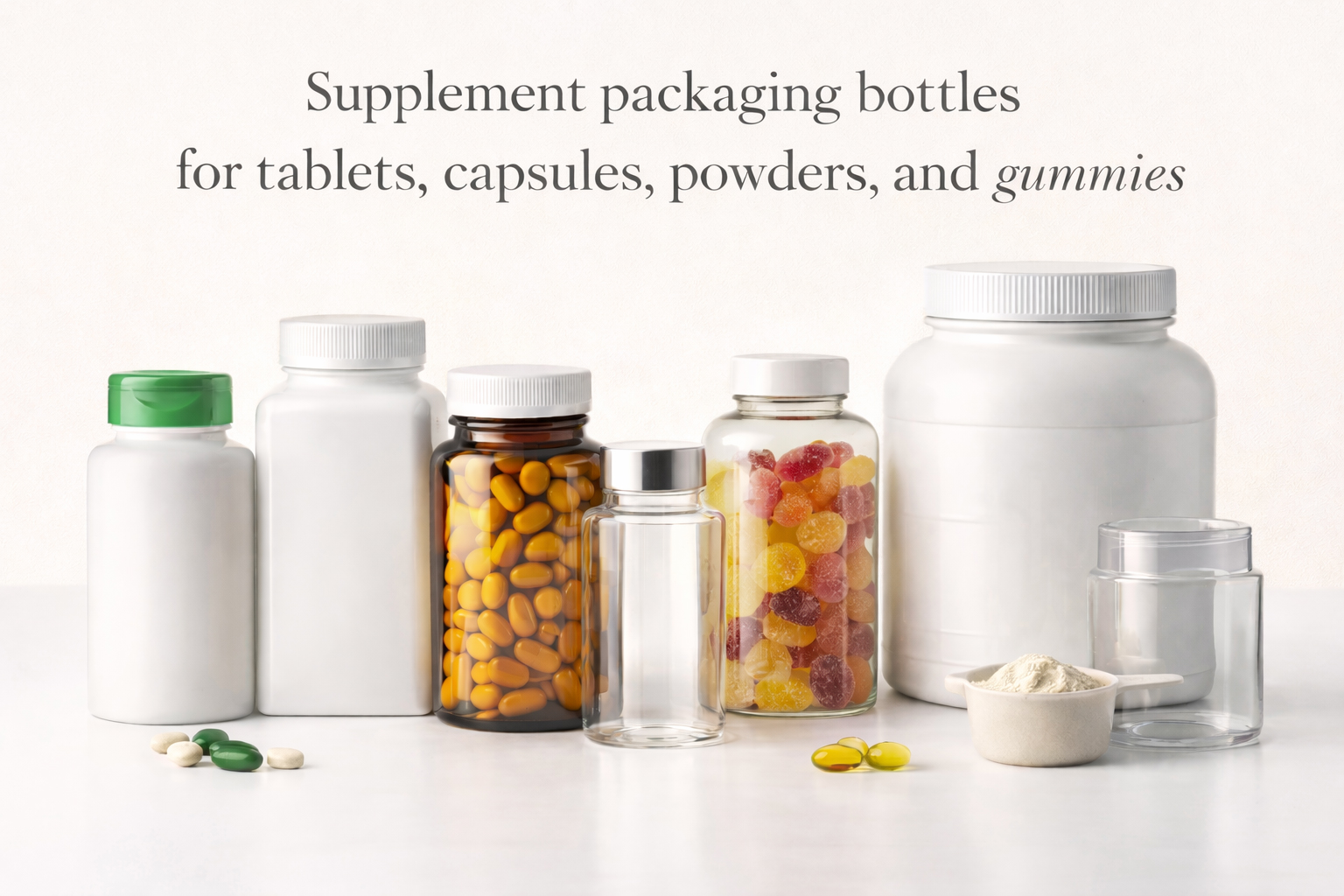
【H3】Tablet & Capsule Bottles
Cylindrical HDPE or PET bottles
Child-resistant or tamper-evident closures
Compatible with automated filling lines
Wide-mouth jars or canisters
Scoop integration
High-impact resistance for shipping
PET or glass bottles with wide openings
High-clarity materials for product visibility
Secure sealing to prevent sticking or moisture ingress
Supplement packaging must support compliance with local and international regulations, including:
Ingredient visibility and label space
Batch coding and expiration dates
Tamper-evident features
Compatibility with FDA, EFSA, or local standards
Packaging design should always consider future regulatory updates, not just current requirements.
While compliance is essential, packaging also communicates brand value.
Customization options include:
Custom colors and finishes
Matte or glossy surface treatments
Embossed or debossed logos
Sustainable material alternatives
A well-designed supplement package builds trust and improves shelf recognition.
An experienced packaging supplier helps brands:
Select suitable materials for each formulation
Ensure filling-line compatibility
Optimize cost without sacrificing quality
Scale packaging solutions as the brand grows
Reliable packaging is a long-term investment, not a one-time decision.