Selecting the right packaging material is a critical decision for cosmetic, personal care, and supplement brands.
Material choice affects product protection, shelf life, regulatory compliance, sustainability performance, and brand positioning.
Below is a practical comparison of commonly used packaging materials, helping brands understand when to choose plastic, glass, or more sustainable alternatives.
Common plastic materials include PET, HDPE, PP, AS, and PMMA, each offering different performance and aesthetic characteristics.
PET (Polyethylene Terephthalate)
Known for its high transparency and premium appearance, PET is commonly used for cosmetic bottles and supplement containers where product visibility is important.
HDPE (High-Density Polyethylene)
HDPE offers excellent chemical resistance and impact strength. It is widely used for supplement bottles and functional cosmetic packaging that requires durability and product protection.
PP (Polypropylene)
Lightweight and heat-resistant, PP is often applied in cosmetic jars, caps, and closures. It is also suitable for packaging requiring frequent opening and closing.
AS (Acrylonitrile Styrene)
AS provides a glass-like look with improved impact resistance, making it popular in mid-to-high-end cosmetic packaging.
PMMA (Acrylic)
PMMA delivers a premium, crystal-clear aesthetic and is commonly used in luxury skincare packaging, such as cream jars and high-end containers.
Plastic packaging offers flexible design options, cost control, and compatibility with a wide range of cosmetic and supplement formulations.
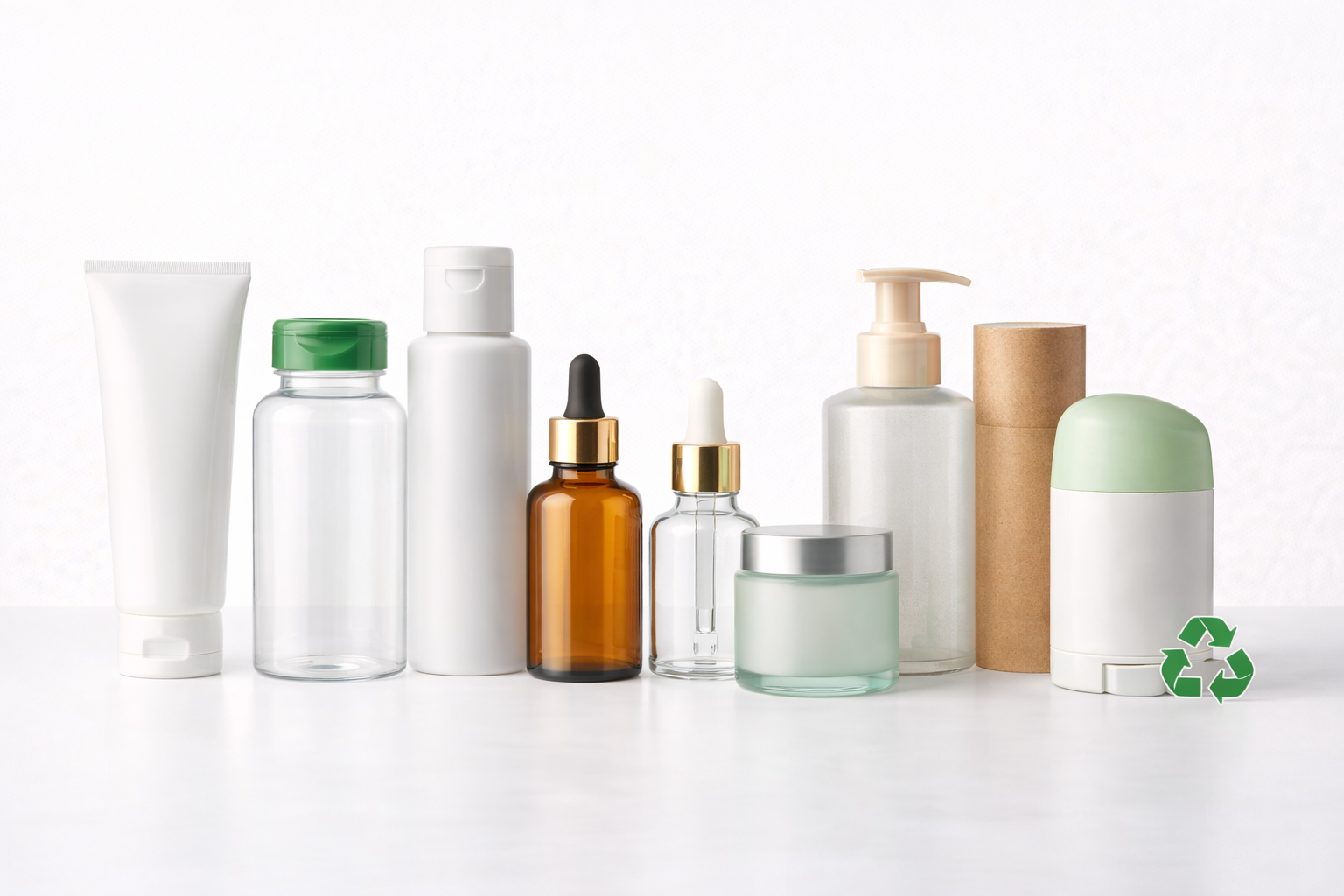
Glass packaging is often associated with premium positioning and purity, particularly in skincare and certain supplement products.
Advantages of glass packaging include:
Excellent chemical stability and barrier properties
Premium appearance and weight perception
Strong compatibility with essential oils and active ingredients
However, glass packaging also has limitations:
Higher transportation and breakage risk
Increased shipping costs
Less flexibility in design compared to plastic
For many brands, plastic packaging offers a more balanced solution, combining lightweight performance, safety, and design versatility—especially for mass-market cosmetic and supplement products.
Glass is best suited for niche, luxury, or formulation-sensitive products, while plastic remains the industry standard for scalable production.
Sustainability has become a growing priority for cosmetic and supplement brands, but packaging solutions must remain practical and scalable.
Currently viable sustainable options in the industry include:
PCR Plastic (Post-Consumer Recycled Plastic)
Widely used for cosmetic bottles and supplement containers, PCR materials reduce virgin plastic usage while maintaining functional performance.
Mono-material Packaging Designs
Using a single plastic material (e.g., all-PP structures) improves recyclability without sacrificing functionality.
Lightweight Packaging Solutions
Reducing material thickness and overall packaging weight lowers carbon footprint and transportation impact.
While biodegradable or compostable materials attract attention, they are often limited by cost, regulatory compliance, and product compatibility.
For most brands, PCR plastics and optimized material structures are the most realistic sustainable solutions today.
There is no one-size-fits-all solution when selecting packaging materials.
Consider the following factors:
Product formulation and chemical compatibility
Target market and brand positioning
Cost structure and logistics requirements
Sustainability goals and regulatory standards
Cosmetic brands often prioritize aesthetics and tactile experience, while supplement brands focus on durability, compliance, and shelf stability.
Working with an experienced packaging supplier helps ensure the right balance between performance, design, and cost.